

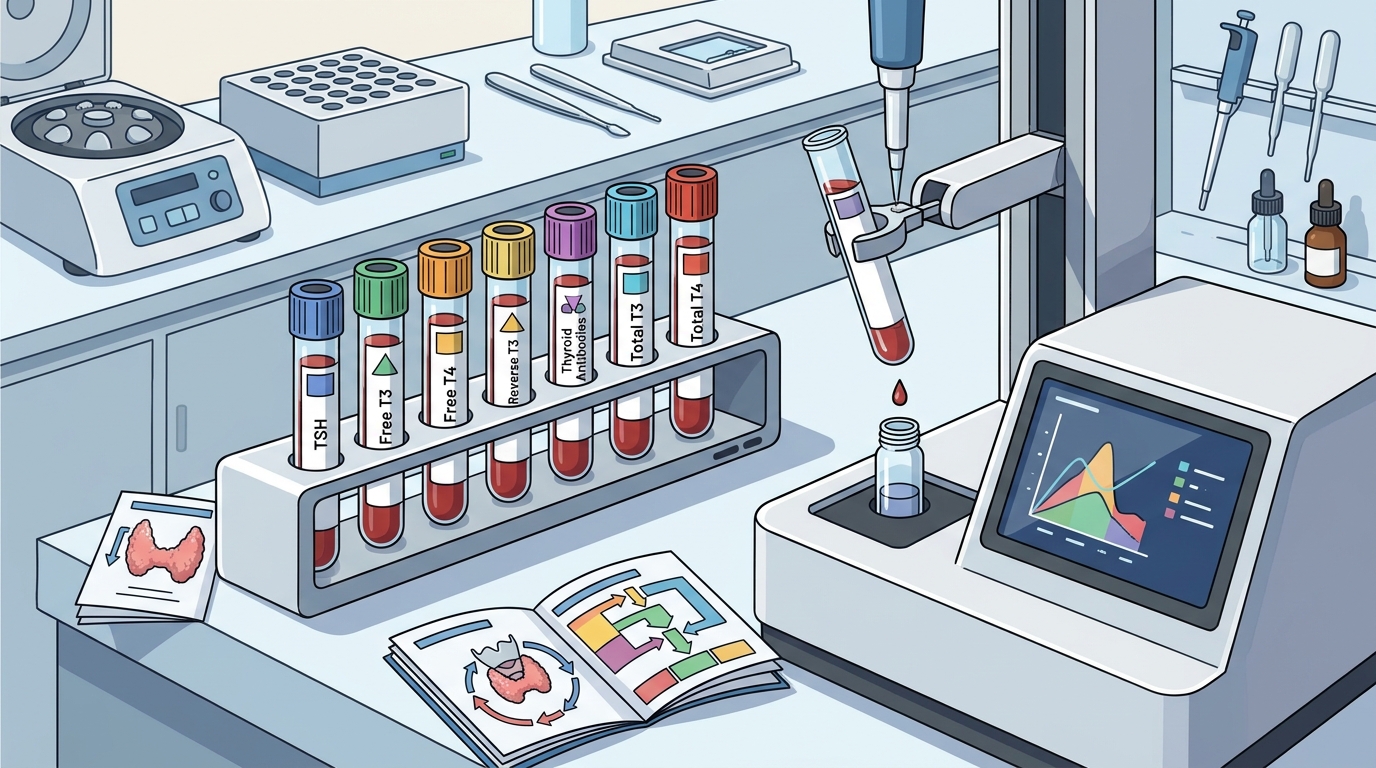
Many patients assume that a single TSH test is enough to evaluate thyroid function, but this approach often misses subtle imbalances that affect energy, mood, and metabolism. A complete hormone health assessment requires a broader panel that looks at the full axis of thyroid production and conversion. At Calia Wellness & Aesthetics, we prioritize a data-driven approach to thyroid optimization, ensuring that every lab value is interpreted in the context of your overall health goals.
1. Thyroid Stimulating Hormone (TSH)
TSH is the primary screening tool for thyroid function. This hormone is produced by the pituitary gland and signals the thyroid to produce T4 and T3. While TSH is among the standard first-line test, it can sometimes appear normal even when the thyroid is underperforming. We use TSH as a baseline anchor to determine if further testing is necessary. For additional details, review the Integrative Wellness Medical Aesthetics.
2. Free T4 (Thyroxine)
Free T4 measures the active hormone available to your cells. T4 is the main hormone produced by the thyroid gland, but only the "free" fraction is biologically active. Low free T4 levels can indicate primary hypothyroidism, while high levels may suggest hyperthyroidism. This test provides a direct look at the thyroid's output capacity.
3. Free T3 (Triiodothyronine)
Free T3 is the most metabolically active thyroid hormone. Your body converts T4 into T3, which is the form that directly influences your metabolism, heart rate, and body temperature. Some patients have normal TSH and T4 but low T3, a condition that can cause persistent fatigue and brain fog. Checking free T3 helps identify conversion issues that standard panels miss.
4. Reverse T3 (rT3)
Reverse T3 is an inactive form of T3 that blocks active hormone receptors. When the body is under stress, it may convert T4 into rT3 instead of active T3 to conserve energy. Elevated rT3 levels can mimic hypothyroid symptoms even when TSH is normal. This test is crucial for understanding how stress and inflammation impact your thyroid conversion process.
5. Thyroid Peroxidase Antibodies (TPOAb)
TPOAb indicates the presence of autoimmune thyroid disease. These antibodies attack the thyroid peroxidase enzyme, which is essential for hormone production. High levels are a hallmark of Hashimoto's thyroiditis, the most common cause of hypothyroidism. Identifying autoimmunity early allows for a more targeted management strategy that addresses the underlying immune response.
6. Thyroglobulin Antibodies (TgAb)
TgAb is another marker for autoimmune thyroid conditions. These antibodies target thyroglobulin, a protein used by the thyroid to store and produce hormones. TgAb is often elevated in patients with Hashimoto's or Graves' disease. Including this test provides a more complete picture of the autoimmune landscape affecting your thyroid.
7. Cortisol and DHEA-S
Cortisol and DHEA-S assess the adrenal axis's impact on thyroid function. The thyroid and adrenal glands are deeply interconnected, and chronic stress can disrupt thyroid hormone conversion. Measuring these adrenal hormones helps distinguish between true thyroid dysfunction and stress-induced metabolic changes. This holistic view is essential for a complete hormone health assessment.
Choosing the Right Panel for Your Needs
Selecting the right tests depends on your specific symptoms and medical history. If you have a family history of thyroid disease, autoimmune markers are critical. If you are experiencing stress-related fatigue, adding adrenal hormones provides valuable context. At Calia Wellness & Aesthetics, we customize your lab panel to ensure you get the most relevant data for your unique health profile.
Frequently Asked Questions
Is TSH alone enough to diagnose thyroid issues?
No, TSH alone is often insufficient for a complete assessment. It can miss subclinical hypothyroidism or conversion issues. A comprehensive panel including free T4, free T3, and antibodies provides a more accurate diagnosis.
What is the difference between T4 and T3?
T4 is the storage form of thyroid hormone, while T3 is the active form that your cells use. Your body converts T4 into T3, and measuring both helps identify if the conversion process is working correctly.
Do I need to test for thyroid antibodies?
Yes, especially if you have a family history of thyroid disease or unexplained symptoms. Antibody testing helps identify autoimmune causes like Hashimoto's, which requires a different management approach than non-autoimmune hypothyroidism.
How often should I get my thyroid tested?
Testing frequency depends on your stability. If your levels are stable, annual testing is often sufficient. If you are adjusting medication or experiencing new symptoms, more frequent monitoring may be needed.
Can stress affect my thyroid test results?
Yes, chronic stress can alter thyroid hormone conversion and increase reverse T3. This is why we often include adrenal hormone testing to get a full picture of your metabolic health.
Where can I get these tests in Austin?
You can get comprehensive thyroid testing at Calia Wellness & Aesthetics in Northwest Austin. Our nurse practitioner-led approach ensures that your results are interpreted in the context of your overall health goals.
Start Your Thyroid Optimization Journey
Understanding your thyroid health is the first step toward feeling your best. If you are experiencing fatigue, weight changes, or mood shifts, it is time to look beyond the basics. At Calia Wellness & Aesthetics, we provide personalized thyroid optimization programs that address the root causes of your symptoms. to schedule a consultation and take control of your hormone health.